
How to Compare Research Peptide Categories
A research category should make a complex catalog easier to navigate. It should group related compounds without implying that every product has the same structure, target, evidence base, or analytical requirements.
- What area of research connects these listings?
- What product-level details still need to be compared individually?
Category is context—not a performance claim
Labels such as GLP, recovery, cognitive, growth hormone, or metabolic research describe a broad pathway or research context. They are useful starting points, but the individual compound name remains the more precise identifier. Researchers should move from category to product page before comparing amounts, formats, documentation, or inventory.
The main ELMNTPEP research categories
Focused categories can also help narrow catalog review: compare Melanotan 2 — 10mg in the tanning research category or PT-141 — 10mg in the sexual-health research category.
Six product details to compare inside any category
- Product name: The exact compound or blend should be obvious and consistently formatted.
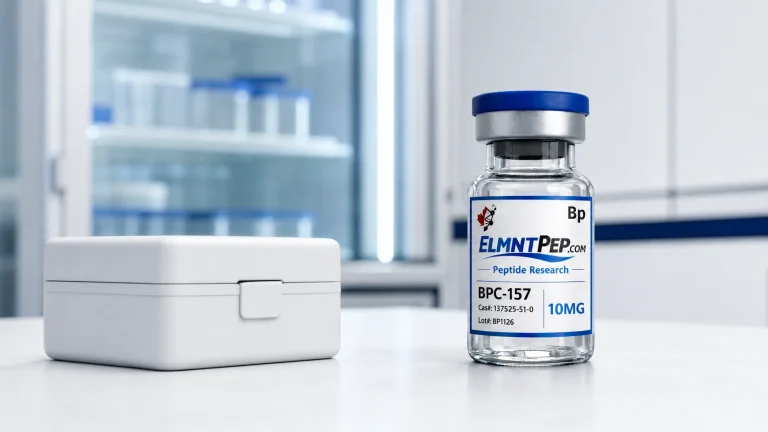
- Labeled strength: The title, product specifications, and product image should agree.
- Format: Confirm whether the listing is one vial, a multi-vial kit, or another clearly named format.
- Availability: Live stock status should determine whether an item can be ordered. Backorders should not be silently accepted.
- Image match: The image should show the correct compound and amount rather than a generic or mismatched label.
- Documentation language: Batch information should be stated accurately, without unsupported purity or performance guarantees.
Single-vial products and the HGH exception
ELMNTPEP peptide listings represent a single vial unless the product title states otherwise. The HGH listing is intentionally different: HGH — 150 IU Kit (10 × 15 IU Vials). Calling that format out in the title prevents a kit from being confused with a single 150 IU vial.
Signals of a more professional catalog
Consistency is not cosmetic. It reduces interpretation errors. Product titles should use the same name-and-strength pattern; images should share a deliberate aspect ratio; unavailable items should not be backordered; prices should be current; and category placement should match the product’s research context.
Absolute claims deserve extra scrutiny. Statements such as “guaranteed purity” are meaningful only when a defined test, batch, method, and result support the exact claim. Clear limitations are more credible than broad assurances.
For a broader site-level review, use the research peptide supplier evaluation checklist to compare catalog accuracy, documentation, shipping, policies, and checkout consistency.
A simple browsing workflow
- Start with the research category that best matches the pathway under review.
- Open individual product pages to compare compound identity and labeled amount.
- Confirm format, stock, price, and image alignment.
- Review batch-documentation status and the research-use notice.
- Use the site search when comparing a specific compound across strengths or related categories.
Browse every current ELMNTPEP product or narrow the list by research category.
Research use notice: Category descriptions and guides are provided for catalog navigation and educational research context. Products are not intended for human or veterinary use.